

Impact of Global Shipping Costs on Tea Prices in the United States
The simple act of enjoying a cup of tea has become a daily ritual for millions of Americans. It’s a moment of calm, a source of comfort, and a tradition that spans cultures. Yet, the price tag on your favorite tea box has been quietly creeping up. This isn’t just a simple case of inflation. A complex web of global logistics, fuel price volatility, and geopolitical tensions is at play, with one factor standing out: the soaring cost of global shipping. Understanding these dynamics is crucial for anyone in the tea industry, from importers to retailers, and for the consumers who cherish their daily brew.
The journey of tea from a lush plantation in Asia or Africa to a cup in a U.S. home is long and intricate. Every step adds to the final cost, but the expense of moving containers across oceans has become a significant and unpredictable variable. These freight cost tea imports have seen unprecedented spikes, creating a ripple effect that is felt all the way down the supply chain. This post will explore the multifaceted impact of rising global shipping costs on tea prices in the U.S., examining the market dynamics, cost components, and consumer reactions that are reshaping the American tea landscape. We will also explore the strategies that businesses are adopting to navigate these challenges and what the future might hold for the U.S. tea market.
The U.S. Tea Market: A Growing Thirst
Tea consumption in the United States has been on a steady incline for decades. Once overshadowed by coffee, tea has carved out a significant space in the American beverage market, with a growth rate that continues to impress industry analysts. Americans now consume over 85 billion servings of tea annually. This surge is driven by a growing awareness of tea’s health benefits, a desire for diverse flavor profiles, and the rise of specialty and premium tea categories.
Tea Consumption Trends
Consumer preferences in the U.S. have diversified significantly. While black tea still holds the largest market share, other varieties are rapidly gaining popularity:
- Black Tea: Remains the most popular, accounting for about 84% of all tea consumed.
- Green Tea: Its consumption has seen explosive growth, fueled by its association with health and wellness. It now makes up about 15% of the market.
- Herbal, Oolong, and White Teas: These niche categories are also experiencing strong growth as consumers become more adventurous and knowledgeable.
This diversification means the U.S. imports tea from a wide range of countries, including China, India, Sri Lanka, Kenya, Bangladesh and Argentina. Each origin point presents unique logistical challenges and costs, making the U.S. tea market particularly sensitive to global shipping fluctuations. The demand is robust, but the supply chain is fragile, a fact that has become increasingly apparent in recent years.
Deconstructing the Rise in Shipping Costs
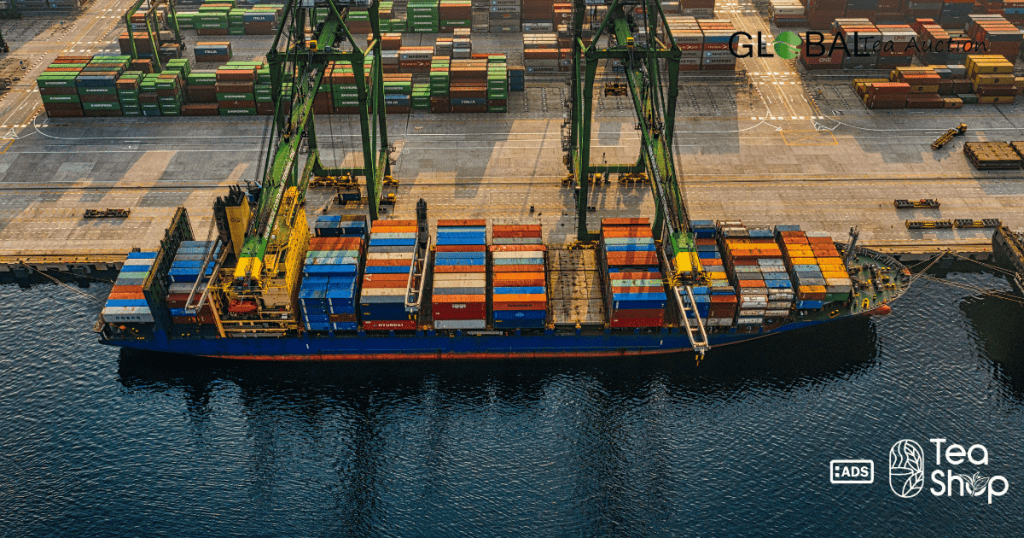
The cost of shipping a container of tea from its origin to a U.S. port isn’t a single, static figure. It’s a dynamic price influenced by several interconnected factors. The recent shipping crisis impact tea prices can be traced back to a perfect storm of economic and geopolitical events that have strained global supply chains.
Fuel Prices: The Direct Correlation
One of the most direct and significant components of shipping expenses is fuel. Bunker fuel, the type used by large container ships, can account for up to 60% of a vessel’s total operating costs. As global oil prices fluctuate, so do shipping rates. Dr. Ben Carter, an economist specializing in trade at the University of Chicago, notes, “There is a near-perfect correlation between crude oil prices and the freight rates charged by shipping lines. When oil prices surged post-pandemic and due to geopolitical instability, the cost of moving goods across the ocean escalated in lockstep.” This direct link means that any volatility in the global energy market immediately translates to higher logistics cost USA importers must bear.
Global Supply Chain Disruptions
The COVID-19 pandemic exposed the vulnerabilities of the global supply chain. Lockdowns, port congestion, and labor shortages created massive bottlenecks. Ships were left waiting for weeks outside major ports like Los Angeles and Long Beach, creating a shortage of available containers and vessel capacity. John Miller, a Supply Chain Analyst at Global Logistics Insight, explains, “What we witnessed was a domino effect. A delay at one port would cascade through the entire network, reducing the effective capacity of the global shipping fleet and driving up demand for the limited available slots. This scarcity allowed carriers to increase tea container rates to historic highs.” While some of these pressures have eased, the system remains more fragile and less predictable than before.
Geopolitical Factors
Trade routes are the arteries of global commerce, and geopolitical tensions can easily clog them. Conflicts, trade disputes, and piracy can force shipping lines to reroute vessels, adding time and cost to voyages. For instance, recent tensions in the Red Sea have forced many ships traveling from Asia to the U.S. East Coast to take the longer route around the Cape of Good Hope in Africa, adding thousands of miles and weeks to transit times. These detours not only increase fuel consumption but also tie up vessel capacity for longer, further tightening the market and increasing costs for importers of all goods, including tea.
Data Analysis: The Numbers Behind the Price Hike
To understand the true impact of shipping on tea prices, it’s essential to look at the data. The numbers paint a clear picture of how escalating logistics expenses have translated into higher costs for both businesses and consumers.
Average Shipping Cost Increases
Over the last five years, the cost to ship a 40-foot container from major tea-producing regions like Asia and Africa to the United States has seen dramatic increases.
| Origin Region | 2019 Avg. Cost (40ft Container) | 2023 Avg. Cost (40ft Container) | Percentage Increase |
|---|---|---|---|
| East Asia | $2,500 | $12,000 | 380% |
| South Asia | $3,000 | $14,500 | 383% |
| East Africa | $3,200 | $15,000 | 369% |
These figures highlight a staggering rise in baseline transportation costs. Emily Chen, a seasoned Tea Importer at East West Trading Co., states, “Five years ago, shipping was a predictable, manageable part of our cost structure. Now, it’s our biggest headache. The volatility makes it nearly impossible to price our products for the long term.”
Shipping’s Share of the Final Price
The percentage of a tea’s final retail price attributed to shipping has grown significantly. For a standard box of tea retailing at $5.00, the breakdown has shifted:
- Pre-2020: Shipping accounted for approximately $0.15, or 3% of the retail price.
- Post-2022: Shipping can now account for as much as $0.75, or 15% of the retail price.
This fivefold increase in shipping’s contribution to the final cost is a primary driver of the price hikes consumers are seeing on store shelves. The U.S. import expenses have fundamentally altered the economics of the tea business.
Shifting Tides: Consumer Behavior in Response
As prices rise, consumer behavior inevitably changes. Shoppers are becoming more price-conscious, and this is having a noticeable effect on the tea market. Sales data indicates a subtle but significant shift in purchasing patterns.
- Rise of Private Labels: There has been a discernible increase in sales of store-brand or private-label teas, which are often priced lower than established national brands.
- Trading Down: Some consumers who previously purchased premium or specialty single-origin teas are now opting for more affordable blends or standard black tea bags.
- Impact on Specialty Teas: While the overall tea market continues to grow, the premium segment has seen a slowdown. Consumers are still willing to pay for quality, but the threshold for what is considered “too expensive” has lowered.
Sarah Roberts, CEO of the Tea Association of the USA, observes, “While the American consumer’s love for tea remains strong, we are seeing more value-driven purchasing decisions. Brands that can deliver a quality product at a competitive price point are navigating this environment more successfully. It’s a challenge for the specialty segment, which relies on unique, high-cost imports.”
The Environmental Cost of Tea’s Journey
Beyond the economic impact, the global shipping industry carries a significant environmental footprint. The sheer scale of maritime trade has made it a major contributor to global greenhouse gas emissions.
Shipping’s Carbon Footprint
The international shipping industry is responsible for approximately 3% of global carbon dioxide emissions. If it were a country, it would be the sixth-largest emitter in the world. A single large container ship can emit as much pollution as 50 million cars. As the volume of global trade, including tea, increases, so does the environmental cost.
The Search for Sustainable Shipping
In response to growing pressure from consumers and regulators, the maritime industry is beginning to explore more sustainable alternatives. These include:
- Alternative Fuels: Research is underway into fuels like green hydrogen, ammonia, and methanol, which produce significantly lower or zero emissions.
- Slow Steaming: Intentionally reducing a ship’s speed can cut fuel consumption and emissions by up to 30%. However, this increases transit times, which can create other supply chain challenges.
- Technological Efficiency: Innovations in ship design, such as more hydrodynamic hulls and air lubrication systems, can reduce fuel usage.
These initiatives are promising but are still in the early stages and often come with higher initial costs, presenting another layer of complexity for tea importers trying to balance price, speed, and sustainability.
Navigating the Storm: Solutions and Adaptations
Faced with these persistent challenges, tea importers and retailers are not standing still. They are actively seeking strategies to mitigate the impact of high shipping costs and adapt to the new reality of the U.S. tea market.
Cost-Saving Strategies for Importers
- Consolidation: Smaller importers are pooling their shipments to fill containers, allowing them to share the costs and gain access to better freight rates.
- Forward Contracts: Some larger companies are negotiating long-term contracts with shipping lines to lock in rates and avoid spot market volatility.
- Diversifying Sourcing: Companies are exploring sourcing tea from countries geographically closer to the U.S., such as in South America, to reduce transit times and costs, though this is not always possible for specific tea varietals.
- Optimizing Inventory: Using advanced data analytics to better forecast demand helps companies manage their inventory more efficiently, reducing the need for last-minute, high-cost shipments.
Government and Industry Roles
There is a growing call for government policies that could help stabilize shipping costs. These might include incentives for shipping lines to increase transparency in their pricing or investments in port infrastructure to reduce congestion. Industry associations are also playing a key role by providing members with market intelligence and facilitating collaborative solutions.
Technological Solutions
Technology is at the forefront of optimizing the supply chain. AI-powered platforms can analyze vast amounts of data to predict port congestion, optimize shipping routes in real-time, and provide businesses with greater visibility into their shipments. These tools are becoming indispensable for navigating the complexities of modern freight cost tea imports.
A New Chapter for the Tea Industry
The era of cheap, predictable global shipping appears to be over. The convergence of volatile fuel prices, persistent supply chain disruptions, and geopolitical uncertainty has fundamentally reshuffled the cost structure of the tea industry. For American consumers, this means the price of their daily cup is likely to remain elevated and potentially continue to rise. For businesses, it necessitates a shift toward greater resilience, agility, and strategic foresight.

The future of the U.S. tea market will be defined by how well the industry adapts to these new challenges. Success will hinge on innovating supply chain management, embracing technology, and effectively communicating the value of tea to consumers, even at a higher price point. While the journey from leaf to cup has become more expensive, the American appetite for tea shows no signs of waning. The challenge now is to ensure that this beloved beverage remains both accessible and sustainable for years to come.
Frequently Asked Questions
1. Why have shipping costs for tea increased so much?
Shipping costs have surged due to a combination of factors, including higher global fuel prices, major port congestion and labor shortages that began during the pandemic, and geopolitical events that have forced ships to take longer, more expensive routes. This has created a shortage of available container space, driving up rates.
2. How much of the price of tea is due to shipping?
Before 2020, shipping costs typically made up about 3% of the retail price of a box of tea. Today, due to the sharp increase in freight rates, that figure can be as high as 15%. This increase in logistics cost USA is a primary reason for higher tea prices.
3. Will tea prices go down if shipping costs decrease?
If shipping costs were to decrease significantly and stabilize, it would likely lead to some price relief for consumers. However, other factors like labor costs, packaging, and raw material prices also influence the final price, so a drop in shipping costs may not translate to a one-for-one decrease on the shelf.
4. Are all types of tea affected equally by rising shipping costs?
While all imported teas are affected, specialty and single-origin teas that are sourced from more remote regions or shipped in smaller quantities can be disproportionately impacted. The fixed cost of shipping a container has a larger effect on the per-unit cost of these higher-value, lower-volume products.
5. What is the tea industry doing to combat these high costs?
The industry is adopting several strategies, including consolidating shipments to share costs, negotiating long-term freight contracts, using technology to optimize logistics, and in some cases, exploring sourcing from regions closer to the U.S. to reduce transit times.
6. How do U.S. import expenses for tea compare to other goods?
The rise in shipping costs has affected all imported goods, not just tea. However, because tea is a relatively low-margin, high-volume product, the sharp increase in U.S. import expenses is particularly challenging and more visible to the end consumer compared to high-margin goods like electronics.
7. Is it more sustainable to buy domestically grown tea?
Yes, purchasing tea grown domestically in places like Hawaii or the Pacific Northwest can significantly reduce the carbon footprint associated with transportation. However, the U.S. has a very limited tea-growing capacity, and most of the varietals consumers enjoy can only be sourced from traditional tea-growing regions abroad.
Authority References:
- World Trade Organization – Global Trade Outlook and Statistics
- International Maritime Organization – Data and reports on shipping emissions
- Tea Association of the USA – Annual reports on the U.S. tea market


